My name is Ali Raffi, and I’m an undergrad student at UVic, studying a combined major in Computer Science and Health Information Science. I’m really interested in how technology intersects with healthcare and how technology can drastically increase accessbility and overall efficiency of the care thats provided.
My Understanding of Learning
From module 1, It helped me learn that Learning is basically when your behavior or abilities change because of practice and experience and this new ability/change stays for a lasting time.
A personal experience for me was when I learned to do a break change on my car. I had zero knowledge about breaks, but after three hours of trial, error and following a youtube video, I finally got it done. The car definitely put up a fight but in the end, I not only fixed my car but also only spent 40$ on parts instead of the 400$ the shops quoted.
Learning Theories and How You Learn Best
The main three theories are Behaviorism, cognitivism, and constructivisim. I possibly connect with constructivism the most as I learn best by trying out different things until i figure them out myself. I don’t think just reading or watching materials are the best way to learn something, I believe that trying out what was there in the materials is the best way to learn.
This approach influenced me as like with the car breaks as example, Watching the video was helpful but what really made me learn was struggling with the process of the break change and understanding how each piece fit together. So usually when I learn, I usually apply it so that it sticks instead of just memorizing it.
Motivation in Learning
The most important part of the ARCS model is relevance. If what i’m studying connects to my life or something taht actually I care about, then I am much more motivated to keep going.
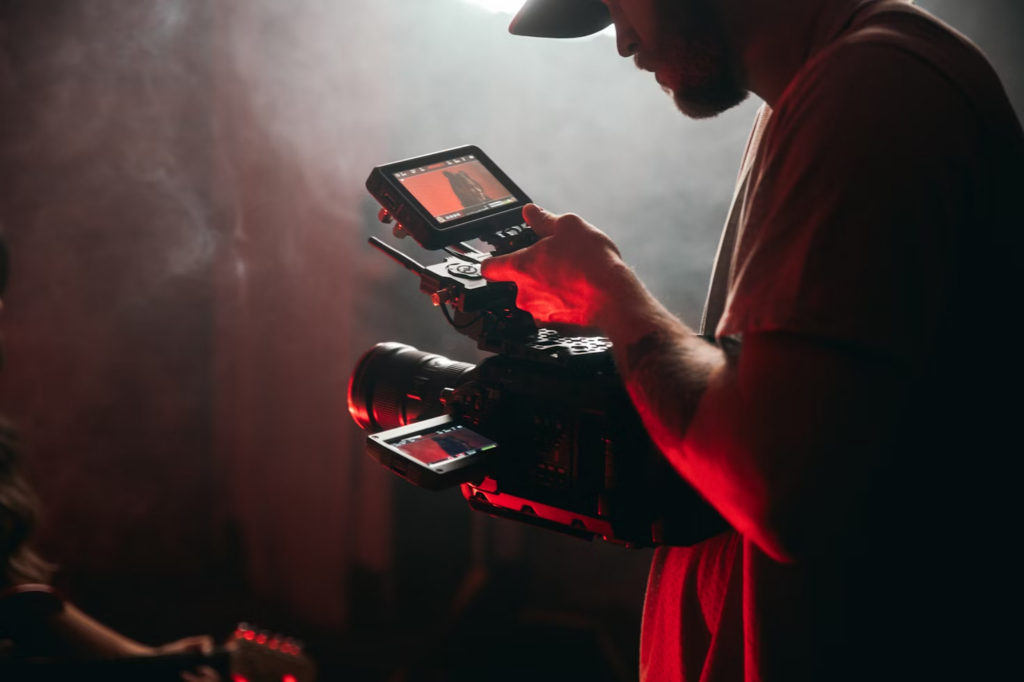
A good example of when relevance played a key role in my success as a learner was when I wamted to learn video editing. As a photographer, I really wanted to create videos but the overwhelming thought of editing demotivated me. Things changed once i started working on small projects that mattered to me. Suddenly a Wedding video shoot wasn’t just “work” to me, but it was rather a fun hobby that I actually enjoyed and egaged with. That personal connection kept me motivated and pushed me to practice until I fully understood how to create visual beauties.
Adult Learning and Prior Knowledge
I’ve realized that prior knowledge and experiences always affect the way I approach new learning. I don’t usually start from zero but rather I try to connect with what I already know about the thing i’m learning.
For example, When I first started learning about videography, my background in photography helped me a lot. l already understood concepts of lighting, framing, composition and so on. So I wasn’t completely lost. Instead of studying everything from scratch, I could just apply the same concepts into videography. This process made the learning curve way smoother and gave me confidence to keep practicing.
Photo by Ali Raffi, used with permission from the subject.
Backward Design and Understanding by Design (UbD)
Backward design is all about starting with the final goals. Instead of jumping straight into lessons, you first decide what you want learners to know or be able to do. After that, you figure out how to check if they actually learned it. Only then do you plan activities or make resources.
When professors used this method, I noticed I always understood why we were doing certain things. Assignments felt like part of a bigger plan rather than random tasks. For example, when we had to do a group project, I realized the smaller weekly assignments had actually prepared us step by step for the final presentation. Because of that planning, the project felt less overwhelming and more purposeful. That experience showed me how powerful backward design can be when everything lines up.
Design Thinking
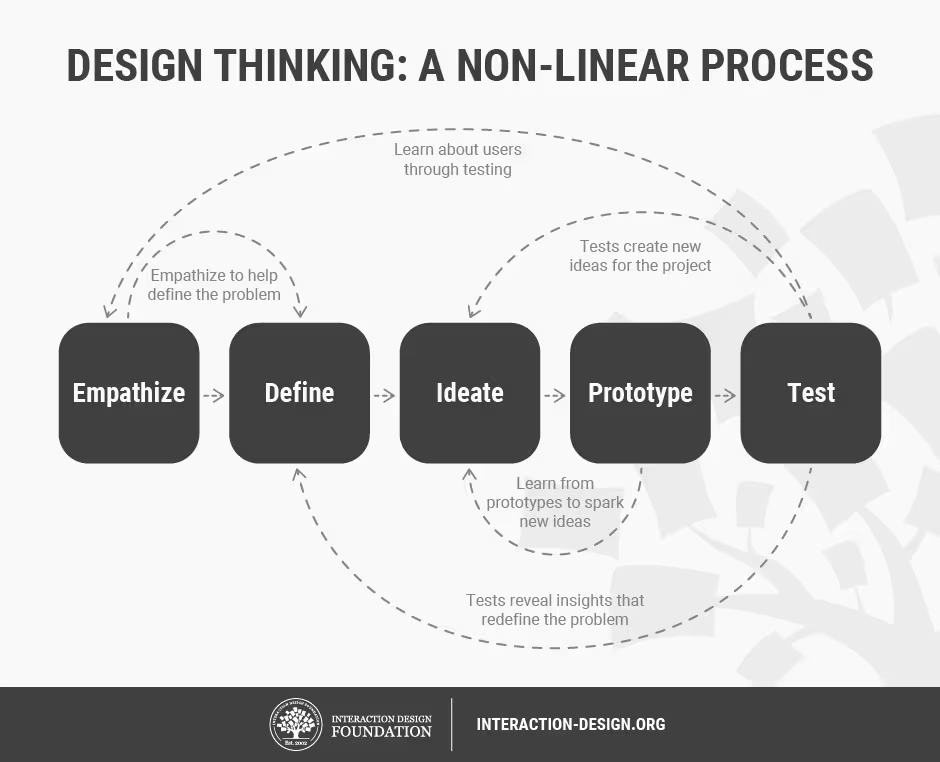
Design thinking is about empathy and trying things out. This module explained how important it is to put yourself in the learner’s shoes so that you can understand their challenges and needs. That way you understand their needs instead of just guessing what might work.
I noticed this in class projects. After collecting feedback on my first drafts, I made changes that really improved my work. What I thought was good wasn’t always what helped others. Testing ideas, listening to feedback, and making edits made the final version stronger.
Strong learning outcomes use clear, measurable verbs. Module 2 pointed out that instead of saying “learners will understand,” it is better to say “learners will apply” The second one is clearer and easier to measure.
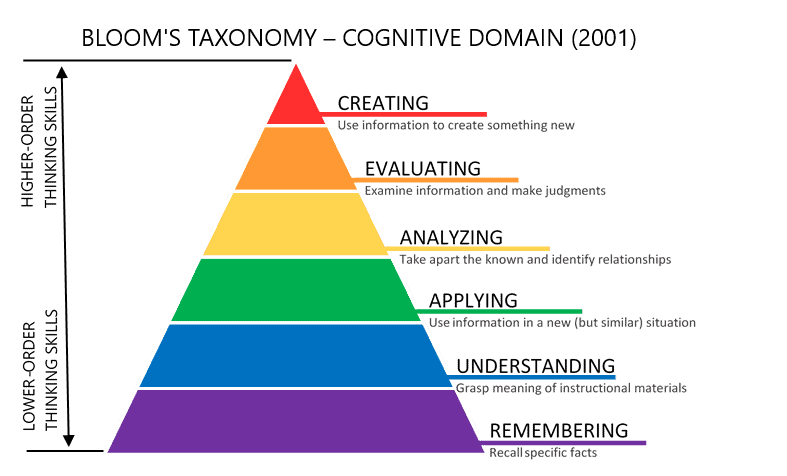
Bloom’s Taxonomy helps sort skills from simple remembering moving upto creating. SOLO Taxonomy looks at how deep the understanding goes, from listing facts to connecting ideas. For example, “know how to use a camera” is vague. “Apply composition and exposure to improve photos” is much more focused and shows real learning.
Better Learning Design: Surface and Deep Learning
The module also explained the difference between surface and deep learning. Surface learning is when you just memorize facts, which usually doesn’t last long. Deep learning happens when you actually apply that knowledge to connect ideas, and solve real problems.
I saw this difference in school. Memorizing notes for a test faded quickly. But building something or making a note helped me remember concepts because I was applying them. This showed me that deep learning is more effective and meaningful.
Focuses on memorizing facts or copying information without deeper understanding. Knowledge often fades quickly.
Memorizing notes word-for-word for a quiz and forgetting most of it after the test.
Deep Learning
Involves applying knowledge, connecting ideas, and solving real problems. Knowledge is retained longer.
Using formulas to analyze real data in class, which helped me actually understand how the math worked.
Inquiry and Project-Based Learning
Inquiry and project-based learning start with real questions or problems. Instead of just following steps, you explore, experiment, and find your own solutions.
I learn best in these situations because they give me freedom to think creatively. Sometimes open-ended projects felt confusing and overwhelming because there was no right answer, but working with classmates or having structure makes it easier. These types of projects are the ones I actually remember because they feel meaningful and practical as it provides me with a sense of freedom.
My Main takeaway
The biggest thing I learned from Module 2 is that good learning design needs clear goals, a plan to measure progress, and activities that fit together. When everything is connected, learning is more focused and feels valuable. Whether I’m in school or working on a personal project, starting with the end goal and adjusting for feedback always leads to a better result.
McTighe, J., Wiggins, G., & ASCD. (2012). UNDERSTANDING BY DESIGN FRAMEWORK. In WWW.ASCD.ORG (pp. 2–5). https://files.ascd.org/staticfiles/ascd/pdf/siteASCD/publications/UbD_WhitePaper0312.pdf
Using Bloom’s taxonomy to write effective learning objectives. https://tips.uark.edu/using-blooms-taxonomy/
Blog Post #3 – Inclusion and Engagement
My Journey Through UDL and Online Learning
In the Module 3, We started to see learning design in a completely new way. We learnt about Universal Design for Learning (UDL), inclusive learning design, synchronous and asynchronous learning, effective online education, and about interaction. This has changed how I think about teaching and learning. As someone who creates multimedia projects through photography and videography, I found these concepts especially meaningful because they connect directly to how I already think about designing experiences that reach different audiences.
Universal Design for Learning
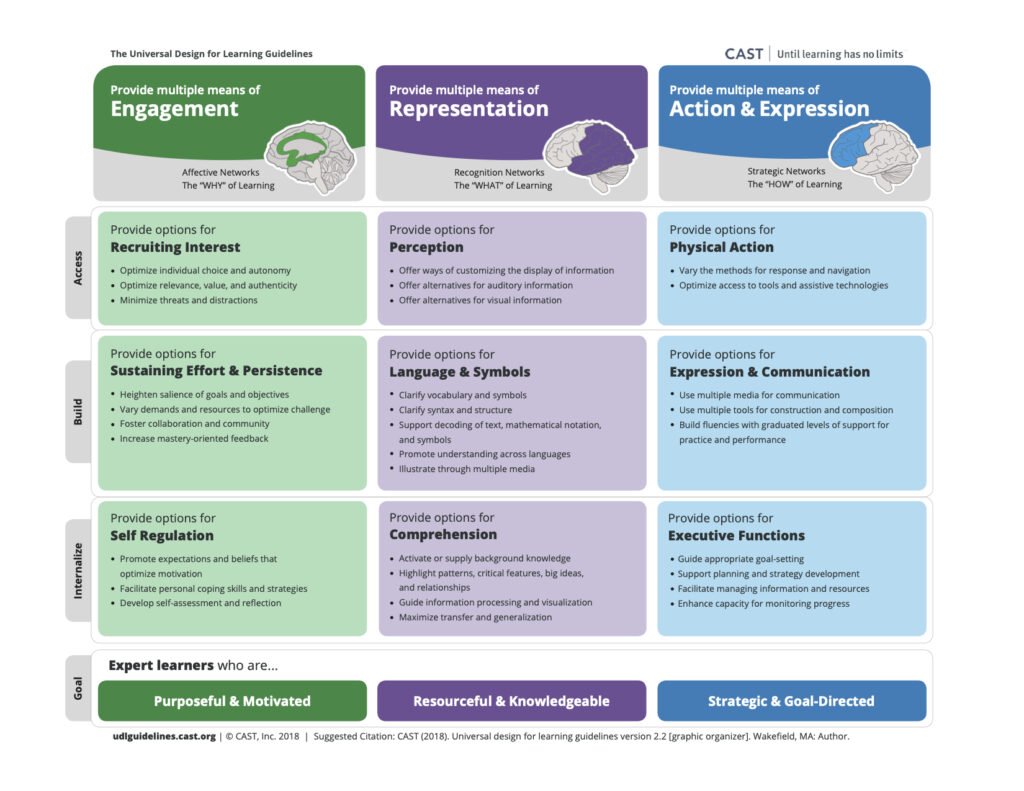
When I first came across UDL from the CAST Guidelines, the most important point for me was a shift of focus from a defective learner to a defective design. Rather than questioning the reason behind a student being in trouble, UDL is trying to find out what obstacles are there in the learning environment and how they could be taken away. That view really connected with my way of thinking.
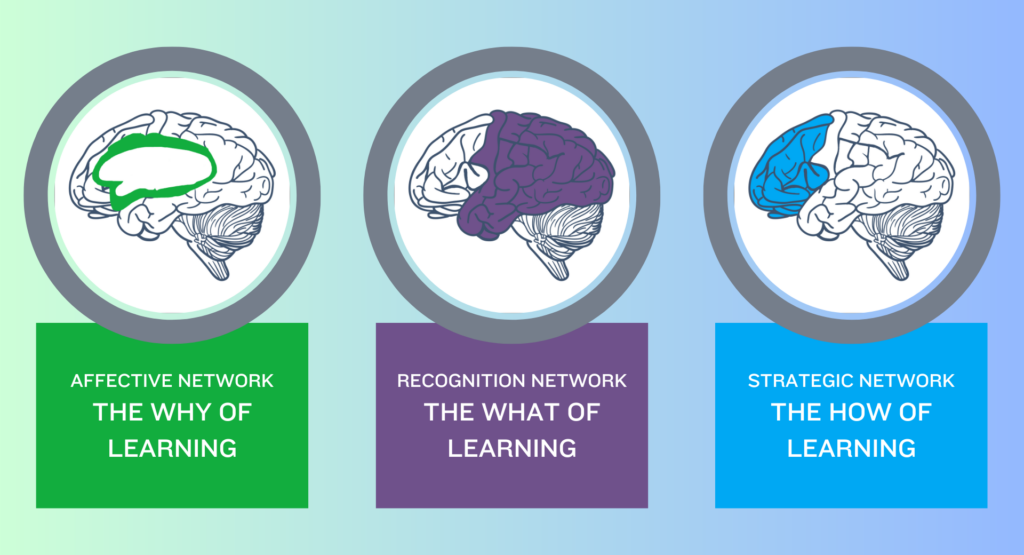
The three basic UDL principles of provides multiple ways of engagement (the “why”), representation (the “what”), and action & expression (the “how”) made me think my method of dealing with photography clients. I don’t just hand over one piece of work. I provide digital galleries, print options (such as photo albums/posters etc) and slideshows as I know that different people have different ways of experiencing visual content. UDL works teh same way by giving the learners different paths to learn teh content and express what they know.
UDL is so helpful because it is baesed on the strong evidence from research. According to CAST, designing with learner variability in mind is helpful for all people, not just the disabled children. It reminds me of an example where sometimes people with slower internet connections might not see images right away, but they can still read the alt text or captions. While those features were originally created for people with visual impairments, they end up supporting many others as well.
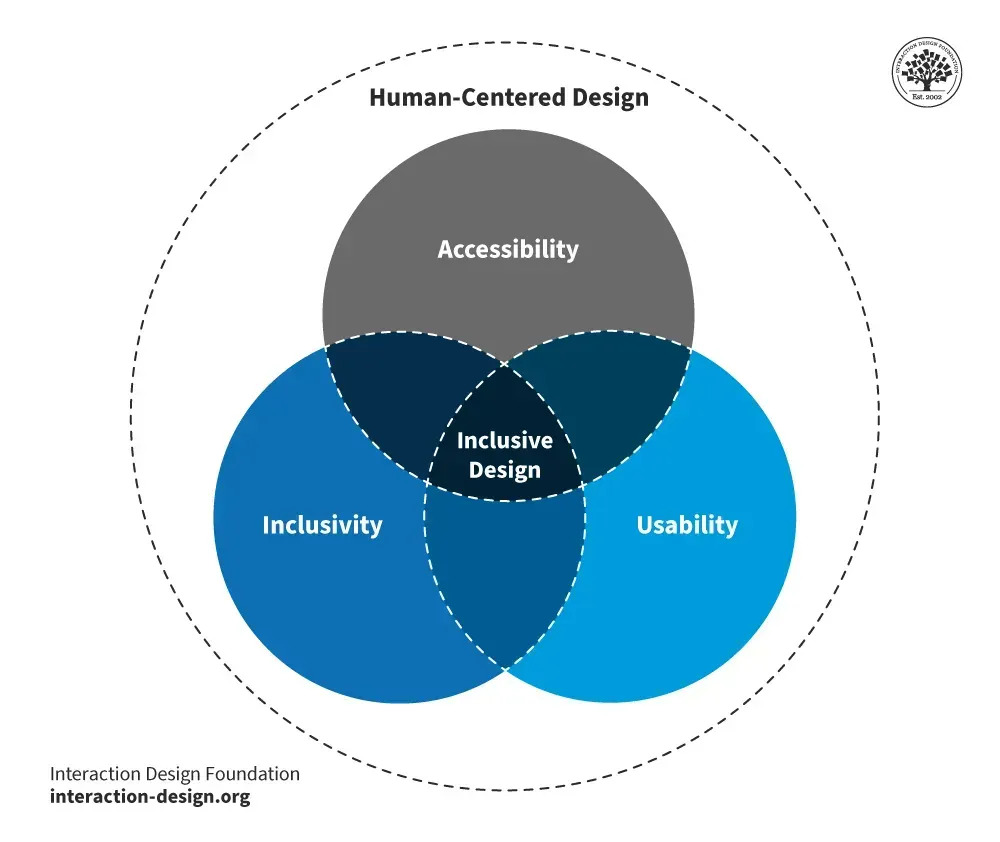
While UDL focuses on removing learning barriers, inclusive design helps me to think about equity, belonging, and representation. It’s not enough that students can access the content, I also need to make sure they benifit from theses content.
When reviewing photography history materials for my current project, I noticed that most of the “famous” examples came from a limited group of photographers. That made me realize how easy it is to unintentionally exclude voices or perspectives. Inclusive design means intentionally including diverse creators, cultural viewpoints, and different ways of knowing.
As a result, many images end up romanticized or whitewashed, showing only one side of the story as these images are often created by the “winners” of history. Therefore the perspectives of people who suffered or lived through the consequences of these events are excluded from photography history. As a result, many images end up romanticized or whitewashed, showing only one side of the story. Inclusive design to me means actively challenging that imbalance by including diverse creators, cultural viewpoints, and different ways of knowing so that learning materials reflect a fuller, more truthful picture of human experience.
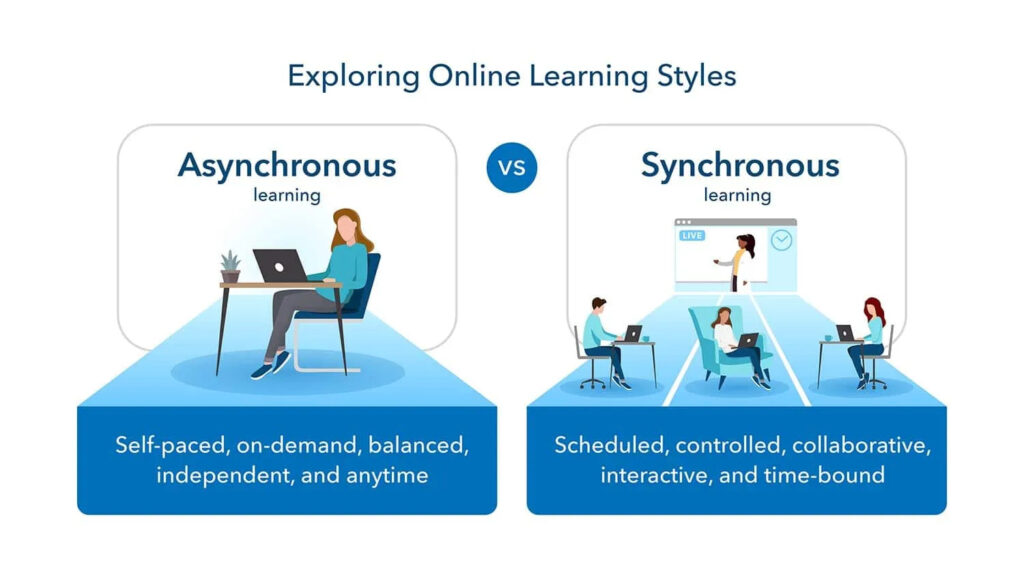
Before this module, I thought more live sessions automatically meant better engagement. But after reading Jennifer Casa-Todd’s article, I learned that both synchronous and asynchronous learning have important roles in education and learning.
Synchronous learning brings energy and connection. In my photography workshops, live sessions allow students to give and receive feedback, collaborate, and build relationships. However, I’ve also seen how synchronous sessions can exclude students who have busy schedules. Some students need more time to reflect before sharing ideas, and that’s where asynchronous learning shines.
The research by J. Casa Todd has helped me understand that choosing between synchronous and asynchronous isn’t the goal but rather combining them to create a more fruitful effect. Asynchronous activities like recorded videos and shared chats allow students to learn at their own pace and revisit materials when needed. It helps those balancing work, family, or learning differences.
Understanding Effective Online Education
One of the most important things to learn from this module has been finding the difference between emergency remote teaching and designed online education. The research by Charles Hodges showed the fast switch to online learning during COVID-19 out of necessity rather than thoughtful plan, which naturaly led to many shortcomings. Whereas effective online education on the other hand is intentional and planned.
Good online teaching means everything including the objectives, materials, activities, and assessments all work together and align correctly. It also means accessibility and clarity is to be planned from the start. For example, providing multiple ways to interact with the material, adding captions and so on. This helps accommodate different learning styles and ensures all students can participate comfortably.
For example, educators can provide multiple ways for students to engage with the material such as discussion boards, quizzes, short video summaries and other activities. Essentially online learning is about designing with purpose and anticipating a future learners needs.
Fostering Interaction and Presence
In online learning, meaningful interaction and a sense of presence don’t just happen by accident, they need to be built into the course on purpose with clear intention. When students participate, whether it’s by joining live discussions, taking part in peer feedback activities, or reflecting privately on their own, they are more likely to feel included and invested in the class. Clear communication from instructors, regular check-ins, and timely feedback all help students feel seen and supported. Group projects, discussion boards, and creative team activities also give students a chance to connect, share ideas, and learn from each other in a more meaningful way.
Small design choices can make a big difference. When learners feel connected to the content, to each other, and to their instructor, they are far more likely to stay engaged and feel a sense of belonging in the learning community.
Reflections
Module 3 helped me see realize that effective and inclusive online learning is more than just putting content online. It requires careful planning that considers all learners and creates opportunities for interaction. Good design gives students different ways to engage, understand, and show what they have learned. Using UDL principles, inclusive design, synchronous and asynchronous activities helps make learning accessible and engaging for everyone. These strategies not only help students who face challenges but improve the experience for all learners. Moving forward, I want to apply these ideas in any learning environment I am part of, keeping inclusion, accessibility, and thoughtful design at the center.
Garrison, D. R., Anderson, T., & Archer, W. (2000). Critical inquiry in a text-based environment: Computer conferencing in higher education. The Internet and Higher Education, 2(2–3), 87–105. https://doi.org/10.1016/S1096-7516(00)00016-6
Hi Simon! I really liked your example about running and how mindset affects every part of learning and not just sports. The way you explained UDL with real moments from your life made it feel like something I could actually use, not just theory. Your point about different kinds of support for ILD like scaffolding early on and then letting students try things on their own reminds me of classes where check-ins from instructors at the right times made a big difference. One thing that stuck out was your thoughts on mixing group members to get people learning from each other. I’ve experienced firsthand how switching up group members brings new ideas and brings a fresh approach to a problem. From your post, It feels like UDL is all about making sure no one’s stuck by themselves, and your post showed how teachers can notice barriers and adapt in the moment.
Hi Larissa! The way you broke down UDL and inclusion for science classes made a lot of sense. It made me realize how often students face the same kinds of barriers but don’t all need the same solution. I liked your idea of bringing in case studies from different backgrounds. it reminded me how much more I care about a topic when I see myself or someone like me in the example. In my experience, feedback from instructors who actually know a bit about you, like your goals or what you find tough makes a huge difference in staying comitted and motivated. I also liked your point about mixing synchronous and asynchronous format, having flexibility for when I’m busy but still having ways to connect (online) is huge. Your examples really helped me picture how teachers can support students in practical ways, not just talk about inclusion as a goal.
Hi Brynn! Reading your post made me appreciate how much thought goes into planning for everyone’s needs right from the beginning. You gave some really practical tips that don’t just sound good on paper, they could actually work in a real classroom. Your example with the Coast Salish animal strengths was a great reminder that when students see a bit of themselves or their culture reflected in what’s happening, it makes learning more personal and interesting for them. I also thought your list of strategies for building belonging was super useful, especially for online classes where it’s easy to feel disconnected. Your examples like online class mind map, virtual science labs, quizzes, games and so on really make sense in staying connected. Things like consistent communication and offering choices in how to participate can really make a difference. You made me think about how having both connection and flexibility is important, especially when everyone’s schedules are so different. Your post gave me clear ideas I could picture using, and it feels like these aren’t just general tips and they actually could change the way a class feels for lots of different students.
Hi Kariman, I really liked your tree metaphor for knowledge. It makes a lot of sense how each new idea builds off what we already know. Once you can see how a skill is actually useful, the motivation to keep going grows so much. I’ve found the same with relevance, when I understand how something connects to my own goals, it’s way easier to stay focused and push through the harder parts.
Something I’ve noticed is that relevance doesn’t always click right away. Sometimes a concept needs to be connected to real life or future projects before it feels important. Other times, it’s only after I’ve struggled with something that I realize how valuable it actually was. I think that’s what makes learning feel like a growing process, where meaning builds over time instead of all at once.
Hey Kynan, I enjoyed reading your post. I could see how much you value project-based learning, and I agree that it’s one of the best ways to stay interested and actually remember what you’re learning. You’re example about creating a system that plots real time data was really cool, it shows how satisfying it feels when something finally works and motivates you to keep going.
I also liked what you said about building on what you already know. I’ve noticed though that prior knowledge can sometimes make things harder too, like when old habits or assumptions don’t fit with new material.
Hi Shawnda, I liked how you connected the ARCS model with lesson planning. It makes the theory feel a lot more practical, and I could see how it would be useful when actually designing a class. Breaking it down into attention, relevance, confidence, and satisfaction makes it easier to think about what a lesson should include.
Something I thought about while reading your post is how it might help to picture a specific lesson and where ARCS would fit. Even just thinking about how to grab attention at the start or make students feel good at the end makes the model feel really practical.
Thanks for sharing your ideas. I found your post really thoughtful and helpful.
Peer Responses #2
Peer response for Hanqi Yang – “Backward Design and Understanding by Design”
I really appreciated how you connected the concept of backward design to your personal study habits, especially your example of focusing on homework assignments and practice exams in math classes. This made your explanation relatable and showed the real benefits of having clear learning outcomes. I also found your insights on design thinking very engaging, the story about developing a Canadian visa application and discovering usability issues through testing was a strong example of why user-centered thinking matters.
I wonder if you could expand a bit more on how SOLO taxonomy could apply to other subjects outside of math and science. For instance, what might a “deep response” look like in a humanities class or in real-world situations? This might help readers see SOLO’s versatility, even if Bloom’s feels more actionable for science majors.
Your blog is clean and easy to follow. The use of bold section headers makes navigation simple, and I like how you structured your reflections as themed sections.
I found your reflection on backward design and “Understanding by Design” compelling, particularly your example about preparing for a final paper by clarifying your outcome. It made the theory very practical. I also liked your focus on empathy and iteration in design thinking, the comic creation story highlighted how feedback and prototyping directly improved your work.
I wonder if you could elaborate on how you might handle the challenge of open-ended project learning, especially when you’re unsure where to start. You mentioned that SOLO taxonomy helps in these cases, so maybe adding a specific strategy or tip out of your experience would provide guidance for others facing similar situations.
Your blog is welcoming and well-organized, with bold section headers and references listed neatly at the end. To further strengthen your reader’s experience (especially early in the course), you could add a brief introduction or overview at the top, outlining what topics or questions your post will cover.